

Staying Cool Naturally This Summer
By the time summer officially arrives, many of us are already overheated. Not just physically—but mentally, emotionally, and energetically. Summer heat affects more than temperature—it impacts mood, sleep, digestion, skin, and the nervous system.
As the days grow longer and temperatures rise, there’s often a subtle pressure to do more. More plans, more socializing, more productivity, more movement. Summer is expansive by nature, and while that can feel energizing at first, it can also quietly push the body beyond its limits.
In Ayurveda, the ancient system of medicine from India, summer is associated with what’s called Pitta—the energy of heat, intensity, and transformation. We experience Pitta externally through hot weather and stronger sun, but also internally through things like inflammation, irritability, overstimulation, skin flare-ups, acid reflux, disrupted sleep, or simply feeling more reactive than usual.
Sometimes excess heat looks obvious. Sometimes it looks like burnout.
The good news is that staying balanced during summer doesn’t require anything extreme. In fact, Ayurveda teaches the opposite.
Summer is less about pushing and more about cooling, softening, and conserving energy where we can.
One of the simplest ways to support the body during summer is through food. As temperatures rise, the body naturally craves meals that are lighter, more hydrating, and easier to digest. Seasonal eating becomes especially important this time of year because nature often provides exactly what the body needs.
Foods & Herbs to Focus on This Summer

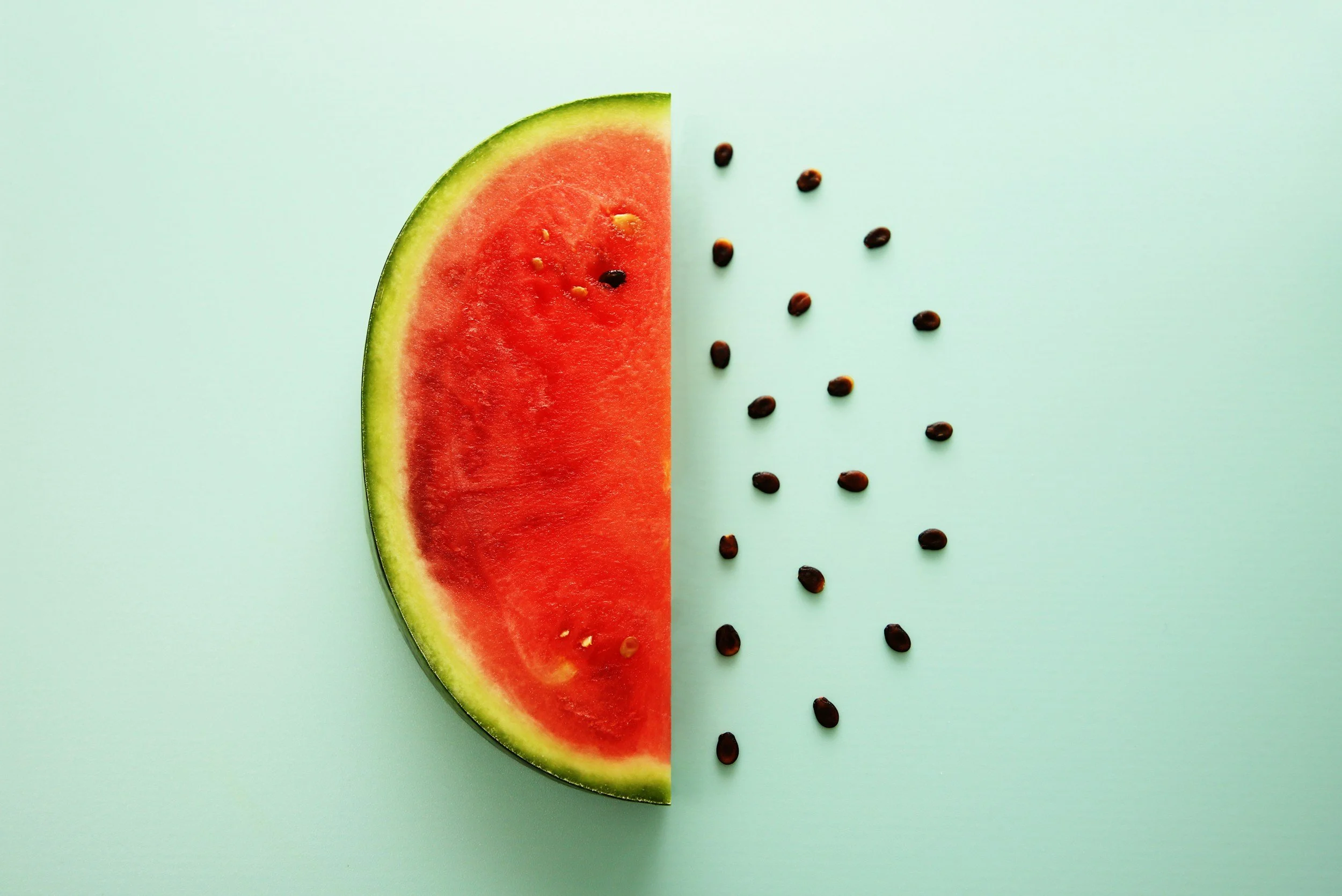
Image credit: @ Elena Koycheva via Unsplash https://unsplash.com/@lenneek
Hydrating fruits
Watermelon, berries, cherries, peaches, pears, grapes, and pomegranate help replenish fluids while naturally cooling the body and adding refreshing sweetness to our day.
Cooling vegetables
Cucumber, zucchini, celery, leafy greens, cilantro, mint, asparagus, and lightly cooked summer vegetables are supportive during hotter months and help us cool down internally.
Bitter foods
In Ayurveda, bitter flavors are valued in summer because they help balance excess heat. Arugula, dandelion greens, parsley, basil, and fresh herbs gently support digestion and the liver without overstimulating the body.
Cooling herbs
Mint, rose, hibiscus, fennel, coriander, and lemon balm have traditionally been used to help calm heat and soothe the nervous system.
Hydrating additions
Coconut water, aloe vera juice, herbal iced teas, and fresh citrus in water can help maintain hydration during hotter days. Cucumber and mint in water are always win, too.
Ayurveda also cautions against relying too heavily on ice-cold drinks during summer. While they feel refreshing in the moment, they can weaken digestion over time—especially when consumed constantly throughout meals. Cool or room-temperature drinks tend to be gentler on the body overall.
Just as important as what we eat is how we move through the season.
Summer Habits That Help You Stay Balanced
Slow down during peak heat
Midday is when both the sun and the body’s internal heat are strongest. If possible, avoid overexertion during the hottest part of the day.
Prioritize rest in the evenings
Summer naturally brings later nights and more stimulation, but the nervous system still needs recovery time. Dim lights, reduce screen time, and allow the body to cool down before sleep.
Hydrate consistently
Rather than waiting until you feel dehydrated, sip fluids steadily throughout the day. Herbal teas, mineral-rich water, and hydrating foods all count. Throwing cooling fruits in a water bottle can help you remember to stay hydrated and make water a bit more fun to drink too.
Adjust exercise with the season
Intense workouts in extreme heat can sometimes create more inflammation and exhaustion. Walking, swimming, yoga, stretching, or exercising earlier in the day may feel more supportive during summer months. Schedule your pickle ball game early or go for your run after the sun has gone down to avoid overheating on the hottest days.
Spend time in nature
Shade, evening air, water, and slower outdoor moments help regulate the nervous system more than we often realize.
Create cooling rituals
Fresh herbs in water, keeping the bedroom cool, applying lotion or oil to the feet before bed, or taking an evening walk after sunset can all help signal safety and calm to the body. Olive oil on a sunburn is my favorite trick to both cool and nourish the skin while supporting its healing process, and you probably already have this in your kitchen.
Perhaps the most important thing summer teaches us is restraint.
Modern culture often encourages us to override our bodies—to stay stimulated, stay productive, stay connected at all times. Yet nature operates differently. When temperatures rise, the natural world slows down. Animals rest. Plants conserve water. Even the brightest parts of the day become quieter.
Our bodies are no different.
Learning to stay balanced in summer isn’t really about “beating the heat.” It’s about listening more carefully to what the body is already asking for.
Often, it’s asking for less intensity. More hydration. More rest. More softness.And sometimes, wellness looks less like doing more—and more like learning when to cool down.
Thumbnail pic credit: Essy Photo via Unsplash https://unsplash.com/@essyfoto
Helen Magnani is a clinical herbalist and Ayurvedic specialist based in Los Angeles.
She formulates small-batch herbal remedies inspired by traditional herbalism and seasonal living through her botanical wellness line, Lab & Leaf.