

Spring is Blooming- So Are Your Allergies
Spring in Los Angeles is a sensory awakening—longer days, blooming jasmine, the subtle warmth returning to our skin. But for many, it also marks the start of something less romantic: itchy eyes, congestion, brain fog, and that familiar heaviness in the body we label as “allergies.”
In Ayurveda, we don’t see seasonal allergies as random or purely environmental. They’re understood as an imbalance—specifically an aggravation of one of the three foundational Ayurvedic energies, or bio-types, known as Kapha dosha, combined with a weakened or overwhelmed digestive fire, referred to in Sanskrit as Agni.
Spring, by nature, is Kapha season: cool, damp, heavy, and fertile. As the earth thaws, so does everything stored within us over winter—excess mucus, stagnation, and toxins, known as ama. When the body can’t efficiently process and eliminate this buildup, it spills over into the symptoms we recognize as allergies.
The good news? Ayurveda—one of the oldest health sciences in the world—offers both preventative and therapeutic approaches that work with the rhythms of the season, not against them.
Think of this as your spring reset.
Prevention: Lighten, Dry, and Awaken
The Ayurvedic principle for spring is simple: oppose like with opposite.
If the season is heavy and damp, we bring in lightness, warmth, and movement. Intuitively, you already know this—you crave warm, grounding foods in winter and lighter, fresher meals in summer. Spring sits between these seasons, and so should your approach.
Start with your diet—one of the most powerful tools you have.
Favor foods that are warm, cooked, and easy to digest: sautéed greens, lightly spiced soups, steamed vegetables, and grains like quinoa or barley. Reduce or temporarily eliminate dairy, excess wheat, fried foods, and sugar. These increase mucus and stagnation while dampening your digestive fire, Agni.
Cold smoothies and iced drinks, while tempting in warmer weather, can actually worsen congestion by slowing digestion.
Incorporate spices that gently stimulate and dry excess Kapha: ginger, turmeric, black pepper, cumin, and the Ayurvedic preparation trikatu. Even a simple cup of hot water with fresh ginger in the morning can begin to shift the internal environment.
This is also the time to move. Kapha thrives on stagnation, so daily exercise is essential—not just for fitness, but for clearing the channels. A brisk walk through the neighborhood, a light jog, or an invigorating yoga or Pilates flow can help mobilize and release what’s been sitting in the body all winter.
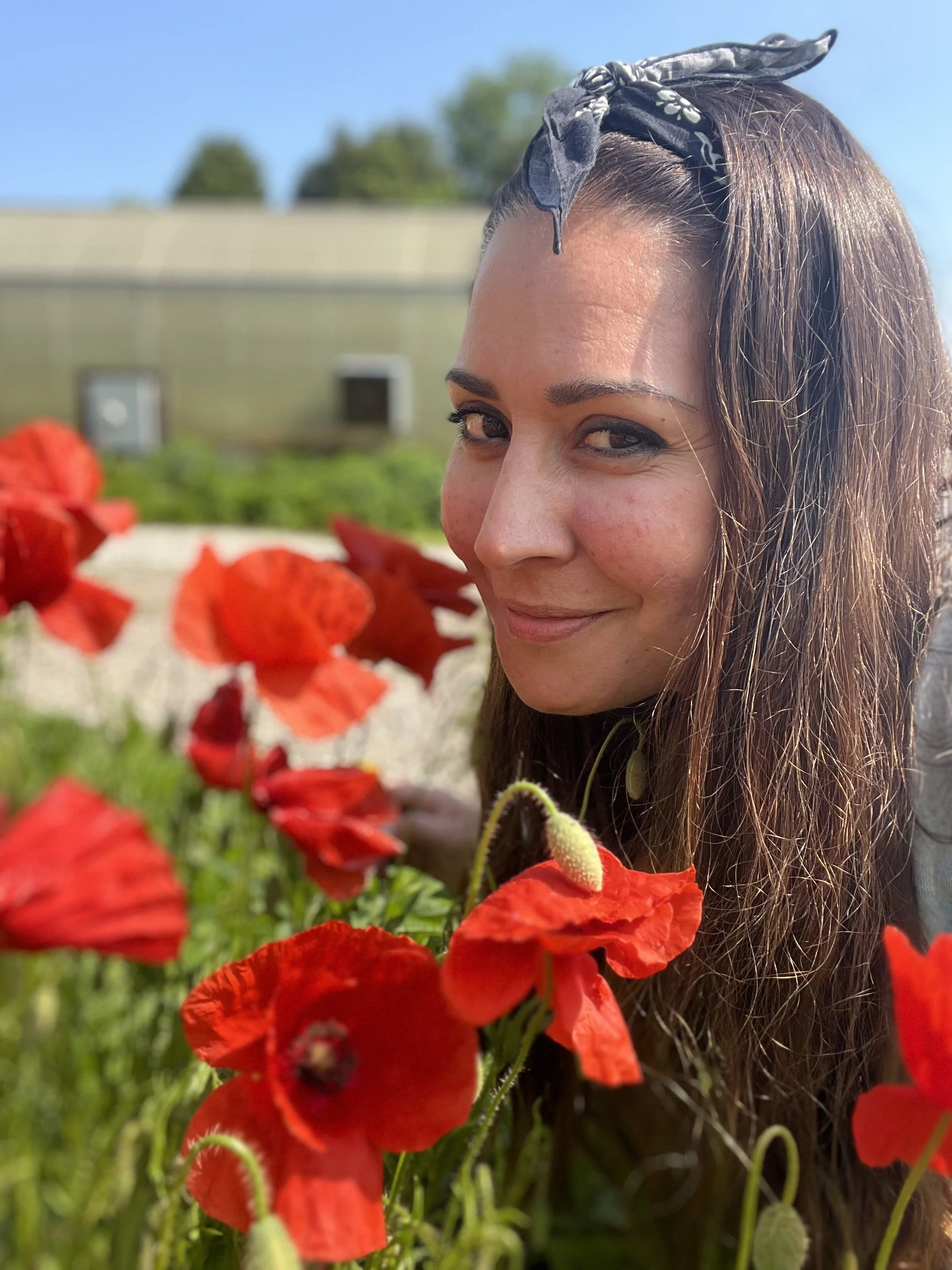
Helen with poppy flowers at the United Plant Savers medicinal forest in Ohio.
Daily Rituals That Make a Difference
Ayurveda shines in its daily practices—small, consistent rituals that create profound shifts over time.
One of the most effective for allergies is nasya, the practice of applying oil to the nasal passages. Using a few drops of medicated oil (like Anu oil) in each nostril helps lubricate, protect, and clear the sinuses. It acts as both prevention and treatment—especially in a place like Los Angeles, where environmental irritants are constant. Even dabbing a small amount of coconut or olive oil just inside the nostrils can be supportive, particularly before exercising outdoors.
Follow this with gentle steam inhalation if you’re feeling congested—add eucalyptus or tulsi for an extra clearing effect.
Another powerful tool is tongue scraping. It may seem simple, but removing buildup each morning helps reduce stagnant ama and supports digestion, which is directly tied to immune resilience.
Dry brushing (garshana) is also especially beneficial in spring. Using a raw silk glove or natural bristle brush before showering helps stimulate lymphatic movement, exfoliate the skin, and counteract that heavy, sluggish Kapha energy.
Herbal Support: Nature as Medicine
There are several time-tested Ayurvedic herbs that support the body during allergy season.
Nettle (Urtica dioica) is a favorite—it acts as a natural antihistamine while also nourishing the body with minerals.
Tulsi (holy basil) (Ocimum tenuiflorum) helps open the lungs, reduce congestion, and support respiratory health while calming the nervous system.
Turmeric (Curcuma longa) works on a deeper level to reduce inflammation and support liver function, which plays a key role in processing allergens.
Triphala, taken at night, gently detoxifies and keeps elimination regular—an essential piece of preventing buildup. This traditional formula combines the herbs Amla (Indian gooseberry) (Phyllanthus emblica), Bibhitaki (Terminalia bellirica), and Haritaki (Terminalia chebula) and is well known for supporting the eyes, skin, and digestion.
For more acute symptoms, formulas that include sitopaladi or trikatu can help break up mucus and rekindle digestive fire.
Consistency is key. Herbs are not quick fixes in the Western sense—they work by gradually rebalancing the body.
When Symptoms Arise: Clear, Don’t Suppress
If allergies have already set in, Ayurveda focuses on clearing rather than suppressing.
Favor warm, light meals and avoid anything that increases mucus. Sip hot water or herbal teas throughout the day to keep channels open. Steam inhalation and nasya become especially important here.
You can also try a simple home remedy: a mixture of raw honey and a pinch of black pepper. In Ayurveda, honey is considered yogavahi—it enhances the delivery of other substances—and has a natural scraping quality that helps reduce excess Kapha.
Choosing local, raw honey adds another layer of support. Because it’s made from the pollen in your immediate environment, small, regular amounts may help the body gradually acclimate to local allergens. (Important: never heat honey, as this alters its beneficial properties.)
Rest when needed, but avoid excessive daytime sleeping, which can worsen heaviness and congestion.
The Deeper Perspective
From an Ayurvedic lens, seasonal allergies are not just something to “get through”—they’re a message. A gentle nudge from the body asking for attention, adjustment, and a return to rhythm.
Spring is a natural time of renewal. When we align with it—lightening our diet, moving our bodies, clearing what no longer serves—we don’t just reduce symptoms. We feel clearer, more energized, more connected.
And that’s really the goal.
Not just to survive allergy season—but to move through it with a sense of ease, vitality, and awareness.
If you’re local to Los Angeles or the surrounding neighborhoods, consider this your invitation to step outside, take a deep breath (even if it’s a little congested at first), and let the season work with you—not against you.
-Helen